
Clinton Projected Versus Actual Release
A projected date is a calculation based on facts known at the time. It may combine the sentence, custody start date, jail credit, concurrent or consecutive terms, statutory sentence credit, earned program credit, revoked or restored credit, escape or absence time, and other lawful adjustments. It is not an adjudicated promise. The actual release date is the day the custodian records the physical exit or transfer.
The difference matters in Clinton County. A pretrial defendant has not yet received a sentence from which staff can calculate a completion date. A court release order may permit an exit, but another warrant, detainer, or case can delay it. A detainer is a request or legal basis for another agency to take custody. The Sheriff's event record must show whether the person entered the community or moved to a new custodian.
Scheduled versus actual: Treat a projected date as a forecast. Confirm the physical exit, release type, and destination with the last custodian.
Find a Clinton Projected Release
Identify the custodian before searching. The Illinois Department of Corrections search applies only after a commitment to state custody. It does not calculate a county-jail-only term, an other-county boarder's sentence, or a federal sentence. The court mittimus, which is the commitment order, and the Clinton County Jail transfer record establish whether IDOC became the custodian.
- Check the Clinton County court case for pretrial orders, disposition, sentence, jail credit, probation, commitment, and later modifications.
- If the person remains at Clinton County Jail, call the jail and request the sentence calculation or custody event. Ask whether another hold affects the date.
- If the court committed the person to IDOC, search by IDOC number first. Otherwise use the last name or date of birth and verify vital statistics.
- Read status, institution, admission and release data, sentencing facts, and
Projected Parole Datetogether. - Record the date of access. Recheck later because credit and legal events can revise the projection.
- For a completed IDOC term with no live result, use IDOC's Contact Us route and choose
Record Search.
The county-specific Judici case search is a useful navigation tool, while the Circuit Clerk remains the official keeper. The docket explains authority. The jail or prison record establishes physical release. The full custodian search is available through the Clinton County released inmate lookup.
The manifest includes a successful view of the IDOC Individual in Custody Search.
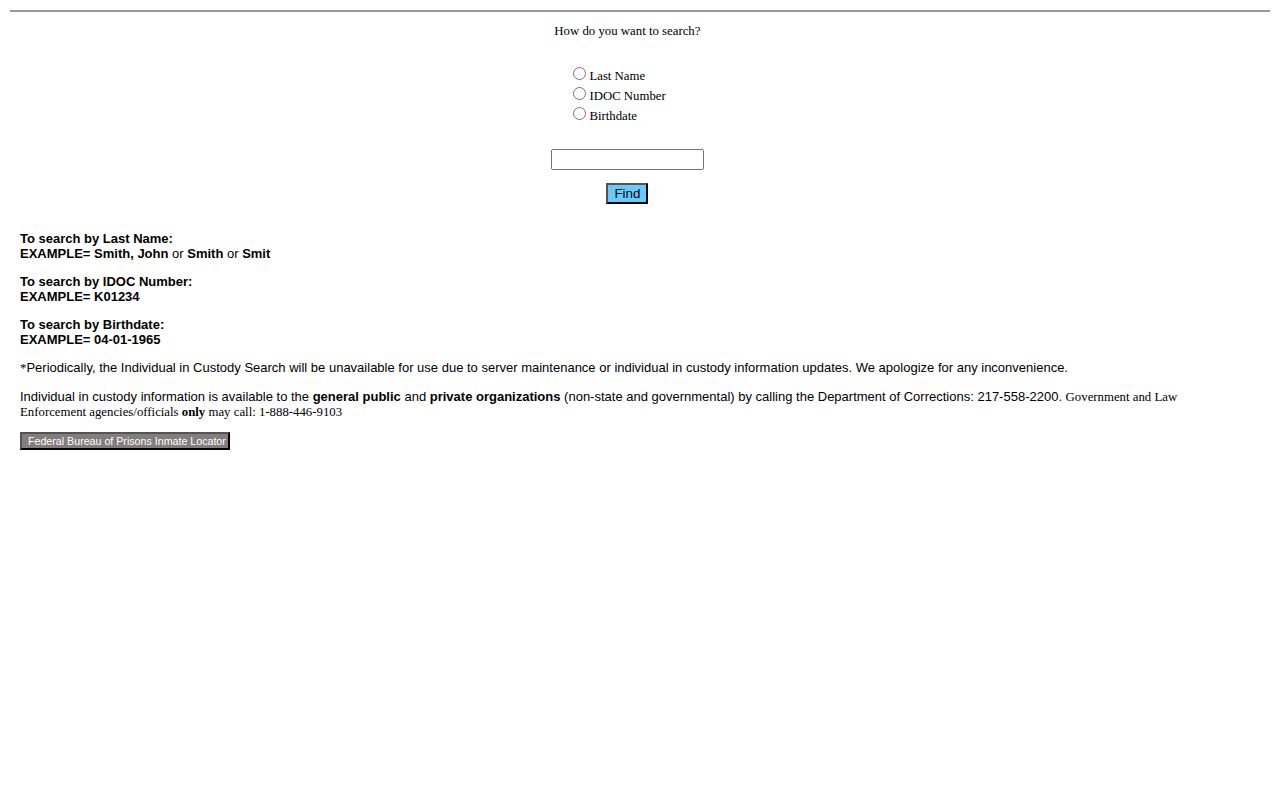
The IDOC profile environment can show status and the Projected Parole Date. Those fields apply to Illinois state custody, not a person serving only at the Clinton County Jail.
Illinois Credit Changes Clinton Release Dates
Illinois sentence-credit law is primarily 730 ILCS 5/3-6-3. Under subsection (a)(2.1), an eligible offense outside restricted categories generally earns one day of sentence credit for each day served. This is often called day-for-day credit and may approximate half of the stated term. It is wrong to say every Illinois sentence is cut in half. The offense, offense date, judicial findings, jail credit, and arrangement of multiple terms control.
Truth-in-sentencing restrictions appear in subsection (a)(2). Covered first-degree murder and terrorism cases can require service of the full term. Several listed serious offenses allow no more than 4.5 credit days per month, which produces service of about 85 percent. Other listed categories can use a 7.5-day-per-month restriction. The exact statutory subparagraph tied to the conviction must be read; a broad claim that every violent offense is an 85-percent case is not supported.
Program-related credits under subsection (a)(4.7) remain subject to statutory floors. They cannot reduce an 85-percent case below that floor, a specified 75-percent case below its applicable floor, or a 100-percent case below full service. IDOC also warns that possible Earned Sentence Credit is discretionary. Eligibility does not create an award or allow prediction for a named person.
When an Earned Sentence Credit award changes the projection, IDOC says it updates the public profile and notifies the person. Subsection (a)(3) contains additional conditions, including at least 60 days served and qualifying county-jail time as specified. Subsection (a)(5) requires notice before certain credit-driven early releases to the prosecution county state's attorney and, when applicable, the release county.
Note: The conviction statute and sentence documents control the credit rate; a label or rough percentage alone cannot establish a Clinton County release date.
Why Clinton Release Projections Change
A projected date is revised when one of its inputs changes. Some changes affect sentence length or credit. Others do not change the mathematical date but prevent community release on that day. Read the current status and any receiving agency along with the forecast.
| Factor | Effect on the release path |
|---|---|
| Earned credit award | May move an eligible IDOC projection earlier within statutory limits. |
| Credit loss or restoration | Can move the calculation later or earlier after an authorized disciplinary decision. |
| Jail credit correction | Changes the custody time counted against a sentence. |
| Concurrent or consecutive terms | Changes how multiple sentences overlap or run one after another. |
| Court order | May amend the sentence, award credit, vacate a judgment, or otherwise alter authority. |
| Detainer or warrant | May send the person to another custodian rather than into the community. |
| Parole decision | A grant authorizes a release path subject to processing and conditions; it does not prove the vote date was the exit date. |
Legacy discretionary parole also differs from modern determinate sentencing. Under 730 ILCS 5/3-3-3, most people sentenced under the post-1978 determinate framework are not candidates for traditional parole. They serve the term less authorized credit and then enter mandatory supervised release. The older database label Projected Parole Date may therefore describe expected release to MSR rather than a discretionary parole grant.
Clinton County Jail Date Calculation
A county-jail-only sentence requires local records. Read the judgment and jail-credit entry from the court, then ask the Sheriff's jail staff for the calculation and custody event. Clinton County publishes no local good-time policy, fixed release hour, weekend-release rule, or online projected-date field. State-prison assumptions should not be copied onto a county term.
The jail population also includes people held for other counties and the U.S. Marshals Service. Their release authority may belong to a different court or custodian. A person delivered to IDOC remains in state custody. A federal boarder returned to USMS remains in federal custody. Ask for the responsible jurisdiction, exit type, and receiving agency.
For federal sentenced custody, use the BOP Locator. Its result can show a past release date and RELEASED. BOP cautions that supervision or another jurisdiction can continue. The official BOP locator field explanation describes those meanings.
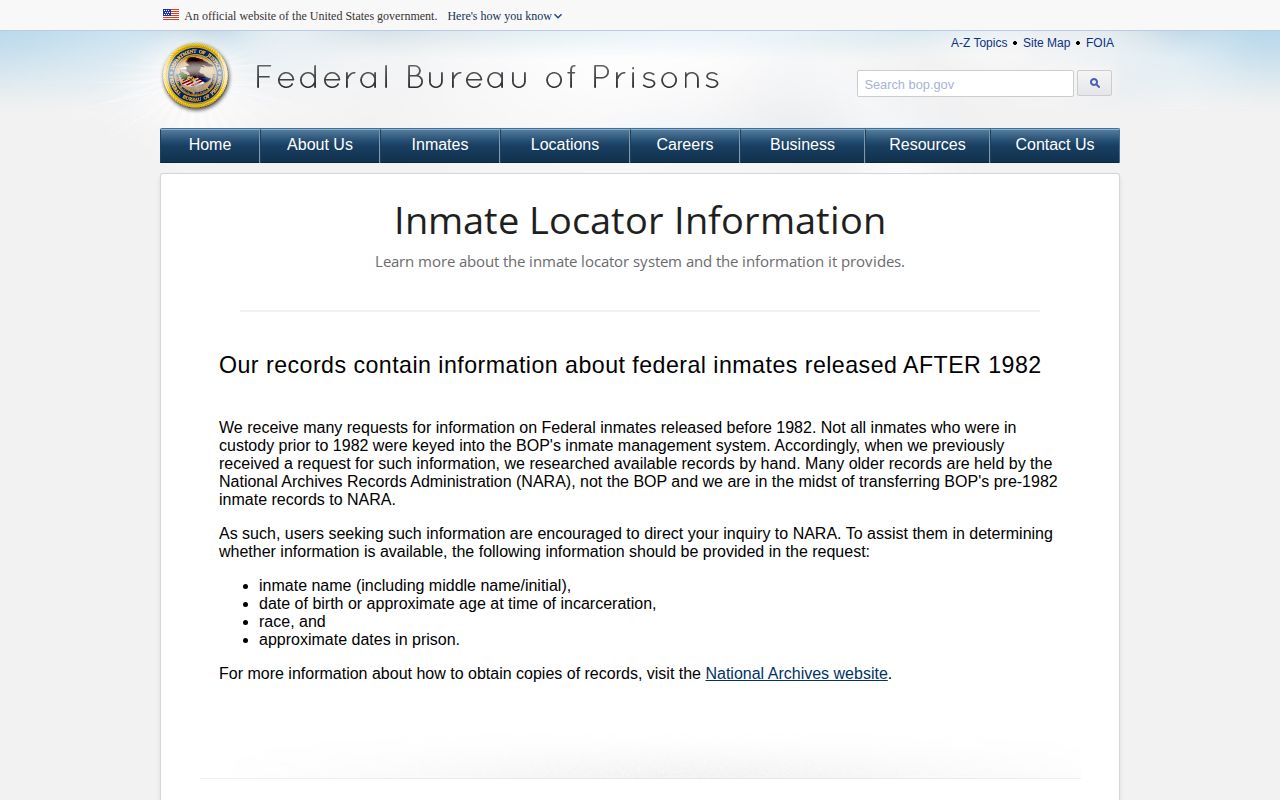
The federal locator's status applies only to BOP custody. It cannot answer a Clinton County Jail sentence or an Illinois state-prison projection.
Clinton Weekenders Are Not Discharged
The Clinton County Jail rules expressly recognize “Weekenders, Work Release, and Sentenced Inmates.” That local category creates an important release-date trap. Someone in an intermittent-custody or work-release arrangement may be physically outside the jail while the sentence continues. Seeing the person away from the building does not prove final discharge.
Confirm the arrangement through the court order and jail record. Ask whether the person must return, whether the current absence is authorized, and what event will mark completion. The final custody event matters more than a one-time observation or a missing name. This distinction is especially important because Clinton County publishes no official live jail roster or release archive against which an observer could check.
Note: Temporary authorized absence, work release, and completed discharge are separate events and should never be treated as the same Clinton County status.
Confirm Clinton County Actual Release
For a pending county or state event, register through the Clinton County VINELink inmate search. VINE may report release, transfer, escape, or a court schedule change. A notification is timely awareness, not the documentary release record. Confirm the event with the source named in the alert.
At Clinton County Jail, ask whether the person is held now. If not, ask for the last custody event, booking number, exit date and time, release authority or type, and destination. The corrections number is 618-594-4556. For written proof, request an existing custody-event record from the Sheriff through Clinton County's FOIA process.
At IDOC, actual release data and current status are stronger than the forecast. A parole or MSR status means the person left the prison building but remains under state supervision. Final discharge ends the sentence. IDOC's live public search covers people incarcerated or on parole, so use its Record Search route when a completed-sentence profile disappears.
Finally, match the court authority to the custodian's exit record. A release order alone may be blocked by another hold. A jail departure alone may be a transfer. Both records together answer when the person left and whether custody truly ended.
A parole hearing date should not be mistaken for a release date. The Illinois Prisoner Review Board publishes calendars and results for the matters it hears. A grant is approval subject to release planning and conditions, while a denial or deferral has a different effect. Always compare the decision with the later IDOC status and actual custody event.
Youthful-parole review is also eligibility for review, not a forecast of release. Illinois law uses offense, age, sentence date, and sentence type to set the applicable review point. Natural-life and specified excluded consequences require their own statutory reading. None of those eligibility dates proves that a person left custody.