
Clinton County Federal Custody Paths
Clinton County’s federal connection comes from boarding, not a federal institution inside the county. The county jail holds some detainees under contract for the U.S. Marshals Service. USMS manages federal pretrial and transport custody but owns no jail. A boarded person may return to USMS, go to federal court, be released under a federal order, or later enter the Bureau of Prisons after sentence.
BOP controls federal sentenced custody. ICE controls civil immigration detention and removal operations. The three agencies share this page because the Facility Map assigns them one filename, but they do not share one database or one meaning of release. A county exit marked return to USMS continues federal custody. A BOP result marked RELEASED ends BOP custody but may be followed by supervision or another jurisdiction. An ICE ODLS no-result does not establish release.
| System | Public route | Conclusion supported |
|---|---|---|
| USMS | Federal court plus holding-facility/USMS records | No public released-person locator; trace the custody event |
| BOP | BOP Inmate Locator | A past date with no facility or RELEASED ends BOP custody |
| ICE | Online Detainee Locator System | Current detention lead; no-result is inconclusive |
Confirm USMS Clinton County Transfers
Start with Clinton County Jail when the person was boarded in Carlyle. Call 618-594-4556 and ask whether the last event was a community release, return to USMS, transport to court, or another transfer. If details are not released by phone, request the booking and custody-event record through Clinton County FOIA. Include the responsible jurisdiction and receiving agency fields.
- Match the county booking to the federal case and person.
- Ask the jail for current physical custody and the last dated exit event.
- Read the federal court docket for detention or release authority.
- Determine whether BOP later received the person after sentence.
- Request agency records if the public chain remains incomplete.
A federal court release order explains authority, but the holding-facility event confirms movement. Another warrant, immigration detainer, or sentence can affect the outcome. There is no comparable public USMS history for released people, so do not substitute a BOP search unless a BOP commitment actually followed.
Search BOP Clinton County Records
The BOP Inmate Locator covers federal inmates from 1982 to the present. Search by BOP register number, FBI number, DCDC number, or INS number. A name search can be narrowed with age, race, and sex. Results show name, register number, age, race, sex, release date, and location. Match carefully before reading the custody result.
BOP’s official explanation is affirmative: when the release date is in the past and no facility appears, release occurred on that date and the person is no longer in BOP custody. A location of RELEASED likewise means BOP custody ended. That statement does not prove unrestricted community status. BOP warns that parole, supervised release, or another jurisdiction may continue.
The official BOP Locator pictured below is the federal sentenced-custody search.
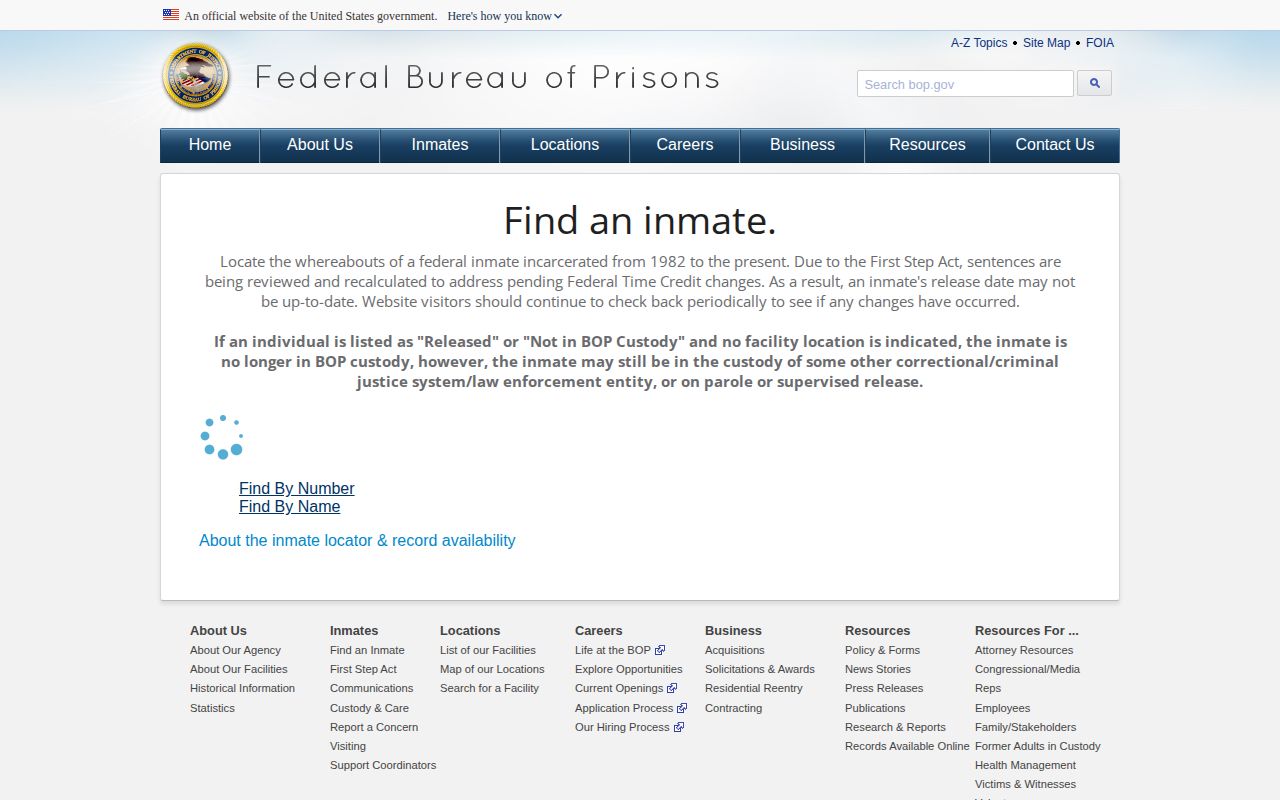
A released result answers the BOP question only; pair it with court supervision and receiving-jurisdiction records.
Read BOP Release Fields
BOP’s field guide explains the difference between a current institution, a future projected release date, and a completed release. A future date can change. A past date without a listed facility is historical evidence that federal prison custody ended. Transfers to another custodial jurisdiction, including a state sentence or ICE detention or removal, are not the same as ordinary BOP community releases.
The official BOP locator record explanation gives the context for RELEASED and past dates.
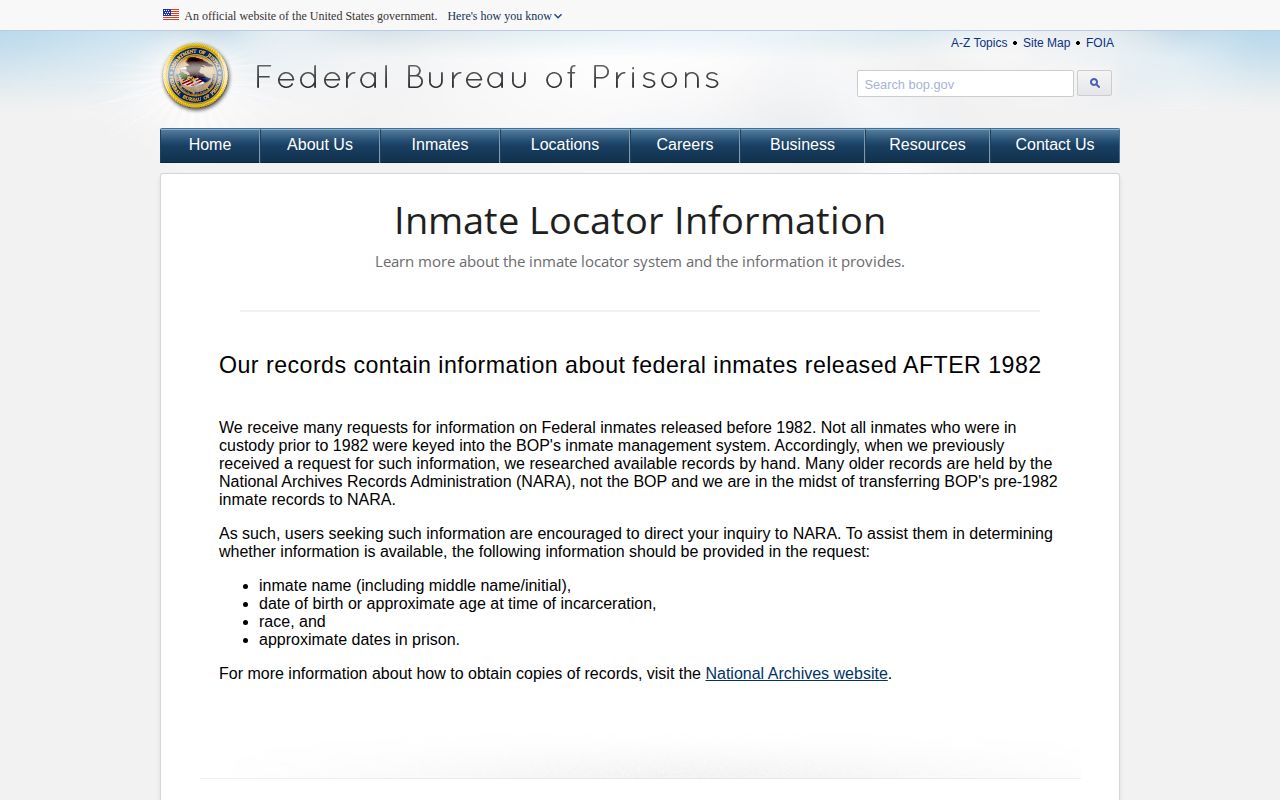
The field guide prevents a BOP release date from being overstated as the end of all legal custody or supervision.
- Register number
- The BOP identifier used for the federal prison record.
- Supervised release
- Court-ordered community supervision that can continue after BOP imprisonment.
- Transfer
- Movement to another custodian rather than release into the community.
- Projected date
- A future estimate subject to lawful change.
ICE Clinton County Custody Checks
The ICE Online Detainee Locator System, or ODLS, is built to locate a person currently in ICE custody or in CBP custody for more than 48 hours. Search with the A-number and country of birth, or use biographical details. Identity details must match closely. The system is current-focused, not a released-person archive.
A missing ODLS result cannot distinguish release, removal, transfer, recent entry, data timing, or an excluded population. Confirm through ICE Enforcement and Removal Operations contacts and immigration case documents. No official source reviewed established a current ICE facility or detention agreement in Clinton County. ICE becomes relevant only when an actual detainer or transfer is documented.
A county release to ICE is not community release. It ends the Clinton County jail’s custody while immigration detention begins or continues. Conversely, disappearance from ODLS cannot prove that the person entered the community. The last positive record and the agency holding it remain more useful than absence from a current locator.
Federal Release Evidence Chain
Federal custody should be traced in order. The Clinton County boarding event shows local physical custody. The federal court docket shows detention, acquittal, sentence, or release authority. USMS records cover pretrial transport and custody. BOP covers a later prison sentence. ICE records apply only to a documented immigration path. Each source answers a narrower question than the phrase “federal release.”
For a past BOP sentence, save the result showing RELEASED or a past release date. For a USMS boarder who never entered BOP, obtain the federal court order and county or USMS event. For a suspected ICE transfer, use ODLS as a lead and then seek case-specific confirmation. A negative result is weakest where the tool is not designed as an archive.
The Clinton County released inmates search explains how to begin with the last known custodian before moving into state or federal systems. That order avoids treating every person who left the county jail as a county community release.
Note: No BOP prison, USMS-owned jail, or verified ICE detention center was found within Clinton County itself.
Federal Custody Record Contacts
There is no single Clinton County federal release desk. The proper contact follows the stage of custody. Clinton County Jail handles the local boarding event. The federal court maintains orders and docket history. USMS handles federal pretrial custody and transport. BOP provides the sentenced-person locator and federal prison records channels. ICE handles an actual immigration detention path.
Federal and Immigration CustodyUSMS custody and detention information
BOP Inmate Locator
ICE Online Detainee Locator
When making a request, include the full name, birth date, federal register or A-number if known, federal case number, Clinton County booking dates, and the last known custodian. Ask for an existing custody event rather than a legal conclusion. The receiving agency and date are especially important when one system reports release while another continues custody.